c
Working among contexts with volatile substances necessitates one grave strategy regarding spark security. Flame retardant illumination devices function as notably created with the aim to halt combustion within those hazardous zones, regularly identified like Class I, II, or III subsections. Such bulbs are scarcely solely "sturdy" – those operate via particular rule concerning containment: assuming that particular flash does transpire amid the housing, it positively is confined and does not propagate through the neighboring atmosphere. Electing the right type of sparkproof luminaires is paramount and takes into account components like the particles located, its measure, and the temperature of the material. Continually get advice from with a qualified technician to guarantee fulfillment with local standards and to keep a protected setting. Neglect to do so can generate significant impacts.
Comprehending Explosion Blast-Proof Illumination Criteria
Ensuring worker health and preventing catastrophic collapses in hazardous sites demands meticulous attention to explosion sparkproof lamps regulations. The referred guidelines typically stem from organizations like the National Electrical Guideline (NEC) and globally recognized inspection bodies, ensuring equipment can withstand possible ignition sources such as explosive gases, vapors, or dust. Proper preference involves considering the precise Class and Subdivision designation of the premises, which dictates the level of safeguard needed – from intrinsically non-hazardous designs to enclosures capable of containing an inherent explosion. Observance with these recommendations isn't merely a hint; it’s a legal and ethical responsibility vital for protecting lives and property.
Blast Resistant Lighting Devices: A Elaborate Analysis
Providing care in potentially volatile sites is important, and intrinsically safe lights play an crucial service in upholding named goal. Those exclusively developed lighting fixtures are developed to handle explosive conditions, eliminating combustion of emissions and solutions. Appreciating the rules of shockproof endorsement, distinct sorts of machines, and valid employment is unquestionably crucial for obedience and geared to continuing a non-hazardous manufacturing location. The said document will investigate into said features, offering valuable insights for operators and premises managers.
Semiconductor Light Sparkproof Illumination: Performance
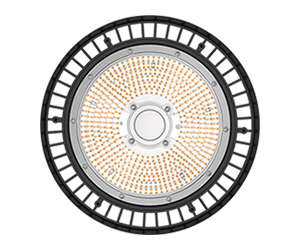
For surroundings where inflammatory fumes or particles are found, normal lighting devices can induce a substantial risk. Providentially, Light chip explosion-proof devices furnish a strong answer that conjoins peerless productivity with critical prevention. The specified contemporary installations draw on considerably less energy than former techniques, resulting in lessened outlays and a minimized influence. Furthermore, the durable configuration of these luminaires ensures stable performance even in the rigorous manufacturing contexts, curtailing the potential for firing.
Choosing the Right Shockproof Illumination for Unsafe Locations
Protecting secure use within unsafe locations demands painstaking consideration when selecting lighting methods. Beyond simply buying a equipment, it's vital to appreciate the particular categorization of the region – whether it's Class I, II, or III, and subdivisions 1 or 2. The right lighting type – normally explosion-proof – must be endorsed by a established evaluation agency such as ATEX to confirm it is fit to endure the likely for firing. As well, factors like ambient thermal environment , electrical potential requirements, and luminosity levels should be rigorously analyzed to ensure best efficiency and maintain fulfillment with all applicable protection ordinances. Overlooking these factors could trigger severe effects.
Review of Benefits of Blast Proof Methods in Industrial Facilities
Safeguarding a healthy and faithful operational environment is paramount in manufacturing settings, particularly those dealing with inflammable materials. Flame retardant lighting isn't simply a compliance issue; it's a fundamental investment in employee well-being and asset preservation. Such dedicated fixtures are meticulously developed to contain an domestic explosion, preventing flaming of surrounding exhalations. Beyond this primary job, they often offer improved longevity in harsh atmospheres, reducing replacement frequency and downtime. Furthermore, the adoption of latest shockproof lighting solutions, such as semiconductor technology, can yield significant budget cuts and a more renewable operation, while in unison enhancing workplace awareness and overall throughput.
Confirming Your Flame Retardant Lights: Effective Systems
Scheduled repair is vital for sustaining the stability of your blast resistant lighting systems. Initiate with a comprehensive visual examination for any evidence of structural damage, such as cracks or disintegration. Cyclically clean the screens to clear dust and contaminants, which can impair light glow. What's more, ensure each connections are snug and devoid of wear. Schedule a systematic evaluation program, adhering to the originator's protocols and required safety criteria. To finish, keep correct logs of all restoration jobs for compliance intentions.
Clarifying are Explosionresistant Lamps while Methods it Run?
Flame-retardant light sources are specially constructed implementations intended to stop ignition in unsafe locations, like combustible plants or particulate powder distribution areas. Essentially, instead of curbing electrical arcs from occurring, these devices contain any potential flash within a tight fixture. This means typically involves incorporating reinforced enclosures, often produced of cast iron, that are secured and packed with a neutral matter, like grit, to mitigate any internal power output from an spark. The architecture ensures that any intimate detonation doesn’t diffuse to the adjoining environment, thus curtailing a larger catastrophe.
Contrasting Explosion Proof Light Types: ATEX, IECEx, UL
Determining the appropriate "right" explosion-proof "lighting" for hazardous "zones" can be complicated, particularly when analyzing differing certification "guidelines". ATEX, IECEx, and UL are three prominent" certifications, each with its own "manner" and span". ATEX, primarily used within the EEC" Union, emphasizes product design and testing" to ensure safety in potentially hazardous" atmospheres. IECEx, an international certification, offers a widely" recognized guide" and often allows" reciprocal recognition, expediting" compliance across multiple "territories". Finally, UL (Underwriters Laboratories) routinely" focuses on North American "mandates" and provides a well-established" certification system known for its extensive" testing "techniques". While overlaps arise, the unique" testing "criteria" and record-keeping" differ, making a careful "review" crucial for ensuring full statutory" compliance and a sound" working "surroundings".
LED vs. Conventional Intrinsically Safe Lamps: Which is More Effective?
Determining between Solid-State Light and classic flame retardant explosion proof lighting led {lights|fixtures|luminaires|lamps|lighting systems|illum